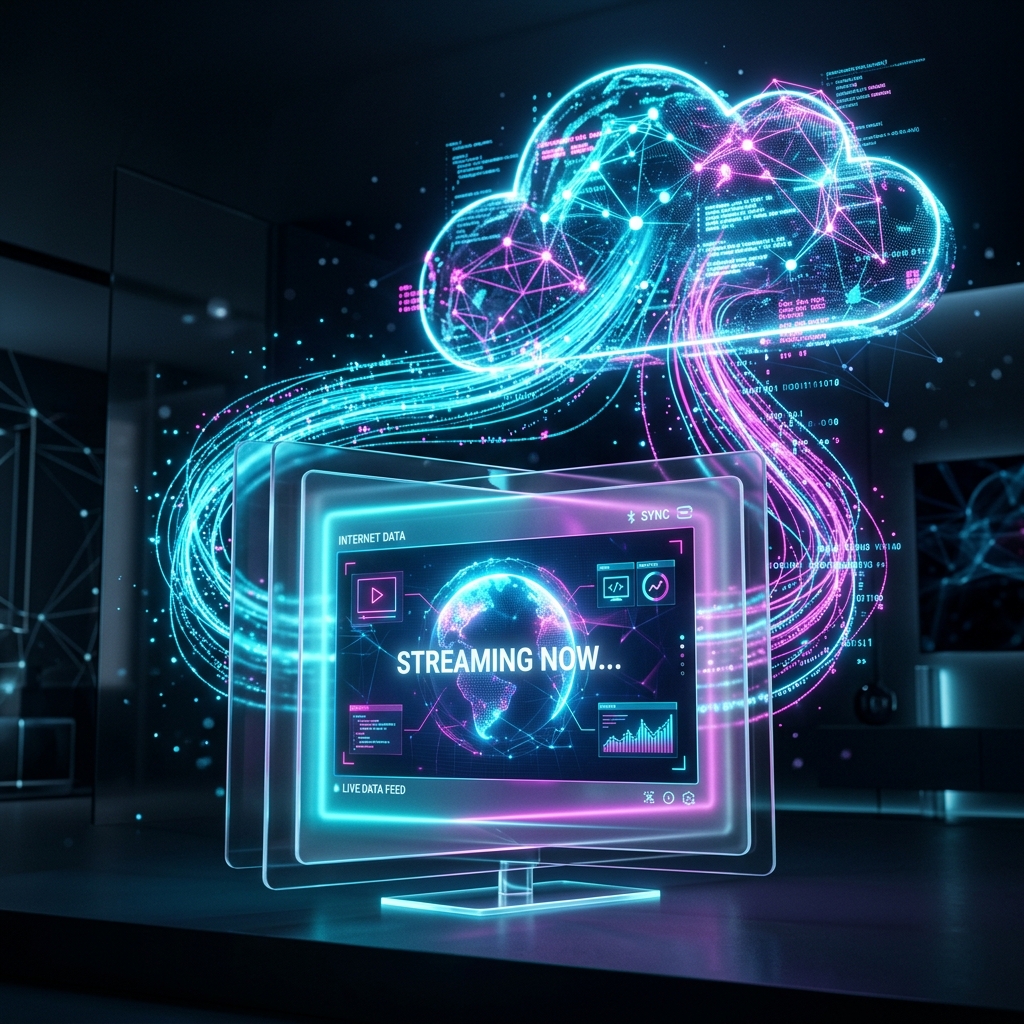
If you have been researching ways to cut down on your monthly household bills, you have almost certainly encountered a specific four-letter acronym. Perhaps a friend recommended it for watching the Premier League, or you saw an advertisement promising thousands of channels for a fraction of the cost of a standard cable package. But before you purchase an IPTV subscription, it is essential to understand the underlying technology. So, what is iptv, exactly? And why is it causing such a massive disruption in the UK entertainment industry?
At its core, IPTV stands for Internet Protocol Television. While that sounds highly technical, the concept is beautifully simple. Instead of receiving your television programming via a satellite dish on your roof (like Sky) or through a fiber-optic cable buried under your street (like Virgin Media), you receive it entirely through your standard broadband internet connection. If you have ever watched a video on YouTube or streamed a movie on Netflix, you have already used the foundational technology behind IPTV. However, true IPTV takes this concept much further, offering live, real-time broadcasts that mirror the traditional TV experience.
How Does the Technology Work?
To truly answer what is iptv, we need to look at how data is handled. Traditional television broadcasts are a ‘push’ technology. A broadcaster sends out a continuous signal containing hundreds of channels simultaneously. Your television antenna or satellite dish catches this massive wave of data, and your TV tuner decodes only the specific channel you choose to watch. It is incredibly inefficient because you are receiving data for 999 channels you aren’t currently watching.
IPTV is a ‘pull’ technology. When you open a compatible application (like Smarters Pro or TiviMate) and click on BBC One, your device sends a direct request to our premium servers. The server responds by sending only the data packets for BBC One directly to your IP address. Because it only sends what you ask for, the provider can offer a massively expanded channel list—often exceeding 50,000 live streams—without overwhelming your home network.
The Three Main Formats of IPTV
The term is often used as a catch-all, but there are actually three distinct formats of Internet Protocol Television. Understanding the difference is crucial when evaluating what type of service you need.
- Live Television (Simulcasting): This is the most common format. It involves streaming live broadcasts in real-time as they happen. Whether it’s a live football match, a breaking news broadcast, or a reality TV finale, you are watching it at the exact same moment as someone using a traditional satellite dish.
- Video on Demand (VOD): Exactly like Netflix or Amazon Prime. A vast library of movies and completed TV series is stored on the server. You select what you want to watch, and it begins playing instantly. You have full control to pause, rewind, and fast-forward. A premium subscription bundles both Live TV and VOD together.
- Time-Shifted TV (Catch-up): This bridges the gap between Live TV and VOD. The server automatically records live broadcasts from major networks and saves them for a set period (usually 7 days). If you miss the start of a program, you can navigate back through your Electronic Programme Guide (EPG) and watch it as if it were a VOD file.
What Do You Need to Get Started?
One of the greatest appeals of this technology is the incredibly low barrier to entry. If you are asking what is iptv, you might be worried about needing expensive hardware or professional installation. The reality is much simpler.
First, you need a stable broadband connection. Because you are streaming high-definition video in real-time, we recommend a minimum internet speed of 30 Mbps for flawless 4K viewing, though 15 Mbps is sufficient for standard HD. Secondly, you need an IPTV compatible device. This can be a modern Smart TV (Samsung, LG), a dedicated streaming dongle (Amazon Firestick), an Apple TV, or even your smartphone or laptop. Finally, you need a subscription from a reputable provider, which will give you the login credentials to access their servers.
The Benefits Over Traditional Broadcasts
Why are millions of households in the UK cancelling their long-standing contracts in favor of this new technology? The advantages are overwhelming:
- Cost Efficiency: Traditional providers charge exorbitant fees for premium sports and movie packages. A top-tier internet-based subscription offers a vastly superior selection of content for a fraction of the monthly cost.
- Global Content: A satellite dish can only pick up signals broadcast within its geographical footprint. An internet connection has no borders. You can watch local American news, Australian sports, or European cinema seamlessly.
- Multi-Device Flexibility: You are not tethered to the living room television. You can watch a football match on your tablet in the garden, or catch up on the news on your smartphone during your morning commute.
Quick Summary
What is IPTV? It is the delivery of live television and on-demand media through your internet connection rather than through a satellite dish or cable. It offers more content, better flexibility, and massive cost savings compared to traditional UK broadcasters.
Are There Any Downsides?
To provide a balanced guide, we must address the potential pitfalls. Because it relies entirely on the internet, if your broadband goes down, your television goes down. Furthermore, live streams are susceptible to buffering if your home Wi-Fi network is unstable or if your Internet Service Provider actively throttles your connection during peak hours. However, as detailed in our anti-buffering guide, utilizing a hardwired Ethernet connection and a premium VPN can completely mitigate these issues.
Now that you understand the technology behind the revolution, it is time to experience it for yourself. Visit our Pricing page to view our robust, anti-freeze UK packages and transform your home entertainment setup today.